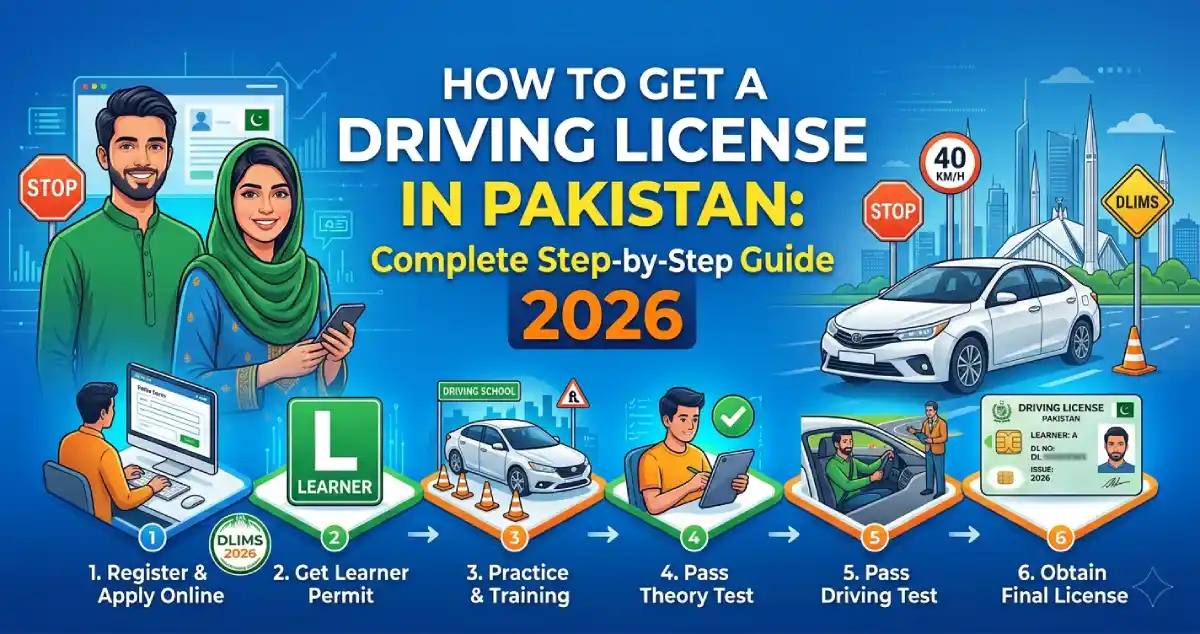
Getting a driving license in Pakistan is a structured process that usually begins with a learner permit and ends with a driving and road test, followed by issuance of the permanent license. If you understand the required documents, age rules, and test sequence in advance, the process becomes much easier and faster.
What you need before applying
Before you apply, make sure you have the basic identity and supporting documents ready, especially your CNIC and recent photographs. In many licensing offices, you will also need a medical certificate for certain applicants, especially older candidates and commercial categories. A prepared file saves time at the counter and reduces repeat visits to the licensing center.
Basic documents
- Original CNIC and copies of it.
- Recent passport-size photographs.
- Medical certificate, where required.
- Loss report or FIR for duplicate cases.
- Learner permit, if you are moving toward a permanent license.
Age requirements
The minimum age depends on the category you want to drive. For a motorcycle or motor car license, the minimum age is 18 years, while commercial categories such as LTV and certain commercial vehicle licenses are generally 21 years and above. HTV endorsement requires a higher threshold and prior licensing experience.
Step-by-step process
The exact procedure can vary slightly by province, but the overall sequence is similar across Pakistan. Most applicants move through registration, screening, medical checks, testing, fee payment, and final license issuance. The following roadmap covers the common flow in a practical way.
Step 1: Create your application
Start by registering through the official licensing system or by visiting the relevant licensing center. Fill in the form carefully, because errors in name, CNIC number, or address can delay approval. Some systems generate a PSID for fee payment after your application is submitted.
Step 2: Submit documents
Upload or present your CNIC, photo, and any required medical or supporting documents. If you are applying for a duplicate license, you may also need a loss report or FIR. This stage is where your eligibility is checked before you are allowed to proceed.
Step 3: Complete screening
At the licensing center, you may go through front-desk screening and registration. This can include identity verification, token issuance, and confirmation of your application details. In some offices, this step is also tied to biometric verification and record matching.
Step 4: Pass the medical and vision checks
Applicants are usually required to pass a vision or medical examination before testing. This confirms that you meet the physical fitness standards needed for safe driving. Commercial applicants and older drivers are more likely to face a formal medical certificate requirement.
Step 5: Take the sign or written test
Many centers include a sign test or a written/oral test before the road test. The purpose is to confirm that you understand road signs, traffic rules, and basic driving theory. Prepare for warning signs, regulatory signs, and common road-safety questions rather than memorizing isolated answers.
Step 6: Appear for the driving test
The road test is the practical part of the licensing process. Here, the examiner checks your ability to start, stop, steer, reverse, park, and follow road discipline. If you are applying for motorcycle or motor car categories, you should be comfortable with vehicle control and lane discipline before arriving.
Step 7: Deposit the fee
After you pass the required tests, you must deposit the applicable fee. Fees can vary by category and validity period, and some systems allow payment for multiple years. Keep the payment receipt because it may be needed for record tracking and license issuance.
Step 8: Receive your license
Once approved, your license is printed and dispatched or made available as an e-license depending on the system used. Some authorities mention courier delivery to the applicant’s address. This is why it is important to provide a correct and active mailing address during application.
License categories
Pakistan’s licensing system includes both non-commercial and commercial categories. The most common entries for private users are motorcycle and motor car licenses, while professional drivers may need LTV, HTV, or other commercial endorsements. Choosing the right category from the start prevents reapplication and wasted fees.
Learner permit basics
A learner permit is the starting point for most first-time applicants. It allows you to practice legally before taking the permanent driving test. In many cases, the permanent test can only be attempted after a waiting period, which is commonly mentioned as 42 days for non-commercial and 90 days for commercial categories in Sindh’s guidance.
Renewal and duplicate license
A driving license does not last forever, so renewal is a normal part of the licensing cycle. If your card is lost, damaged, or stolen, you can apply for a duplicate license with supporting documents such as a loss report or FIR. Keeping both a physical card and any available e-license copy helps avoid problems during inspection.
Tips for first-time applicants
Go to the center early, keep every document in one folder, and double-check spelling before submission. Practice basic driving movements, road signs, and parking before the test date so your practical performance feels natural. If your license is for professional driving, treat the medical and road-test stages with extra care because the standards are more strict.
Also Read : How To Apply for Driving License in Pakistan
FAQ Section
Can I Apply Online?
Yes, some licensing systems in Pakistan support online registration, document steps, and fee generation, but the exact flow depends on the province and authority. In many cases, you still need to appear physically for screening, medical checks, or testing.
How long is a learner license valid?
The Sindh licensing guidance mentions a learner’s driving license validity of one year. Always check the current rule in your province before submitting because processes can change.
Is a driving school necessary?
A driving school is not always mandatory, but it can help beginners build confidence and prepare for the test. For many applicants, especially first-timers, structured training reduces mistakes in the practical exam.